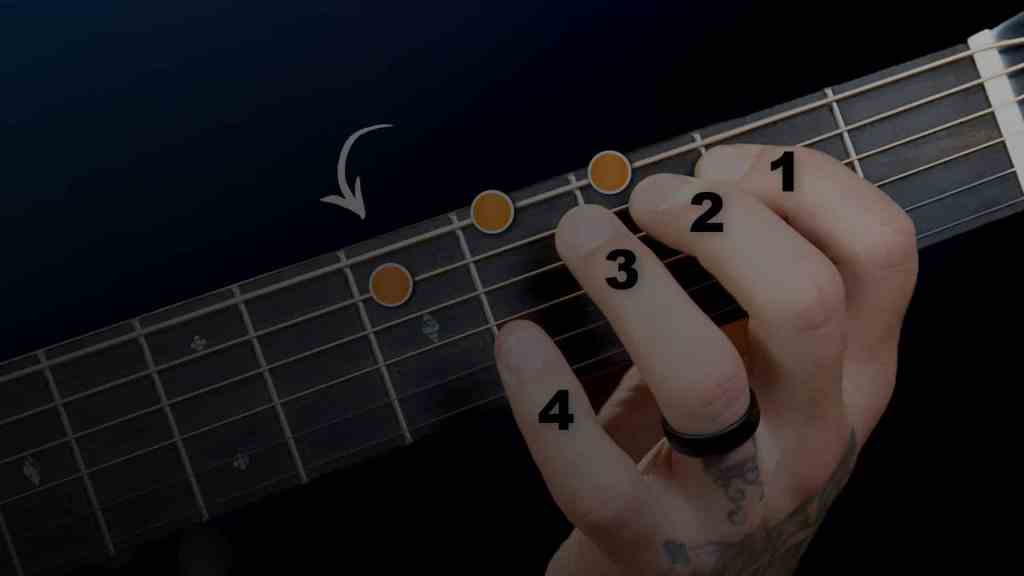
Learning to play guitar is an exciting journey, and mastering your first two chords is a huge step toward playing your favorite songs. Whether you’re picking up the guitar for the first time or revisiting the basics, starting with two simple yet versatile chords can set you on the right path. In this guide, we’ll break down two essential chords, how to play them, and how to transition smoothly between them.
The First Two Chords: E Minor and A Major
1. E Minor (Em)
E minor is one of the easiest chords to play, and it has a rich, full sound that works well in many songs.
How to Play:
- Place your middle finger on the 2nd fret of the A string (5th string).
- Place your ring finger on the 2nd fret of the D string (4th string).
- Strum all six strings.
Tablature:
E|------0------
B|------0------
G|------0------
D|------2------
A|------2------
E|------0------
Why Em?
- It uses only two fingers, making it a great starting point.
- It sounds great in rock, pop, and folk songs.
2. A Major (A)
A major is another fundamental chord that appears in countless songs.
How to Play:
- Place your index finger on the 2nd fret of the D string (4th string).
- Place your middle finger on the 2nd fret of the G string (3rd string).
- Place your ring finger on the 2nd fret of the B string (2nd string).
- Strum from the A string (5th string) down.
Tablature:
E|------0------
B|------2------
G|------2------
D|------2------
A|------0------
E|-------------
Why A?
- It helps develop finger dexterity.
- It’s commonly used in many popular songs.
Switching Between Em and A
Smooth transitions between chords are key to playing songs effortlessly. Here’s how to practice switching between Em and A:
- Play Em and strum four times.
- Lift your fingers and place them in position for A.
- Play A and strum four times.
- Repeat slowly, increasing speed as you get comfortable.
Practice Tips
- Use a Metronome: Start slow and gradually increase your speed.
- Relax Your Hand: Tension makes chord changes harder.
- Look Away: Try switching chords without looking at your fingers.
- Practice Daily: Even 10 minutes a day can make a big difference.
Next Steps
Once you’re comfortable with these two chords, try playing simple songs that use them, like “Knockin’ on Heaven’s Door” by Bob Dylan or “Horse with No Name” by America. Mastering these basics will make learning additional chords much easier.
Happy playing! 🎸
 kiltroattack.com
Leave a comment